
Accessibility Integration and Artificial Intelligence for Museums / aimused.eu
About the project
AIMused is the first initiative in the South Baltic region that combines artificial intelligence and accessibility in educational tourism.
Its goal is to make the content and experiences offered by tourist attractions more accessible – so that everyone, regardless of age, ability or perception of the world, can enjoy them fully.
The project brings together institutions with diverse profiles – museums, an aquarium, SMEs and universities. This cross-sectoral collaboration merges scientific, technological and social expertise to create tools that will make tourism more inclusive, understandable and visitor-friendly.
Project co-financed by the European Regional Development Fund under the Interreg South Baltic Programme 2021–2027.
Project objective
Across Europe – and in the South Baltic region as well – societies are ageing and the number of people with cognitive and accessibility needs is growing.
According to Eurostat data (2023), 27% of Europeans aged 16 and over reported having some form of disability. This equals 101 million people, or one in four adults in the EU.
For the countries in our region, the statistics are as follows:
Poland – 24.4%, Germany – 28.2%, Denmark – 36.7%, Lithuania – 27.4%, Sweden – 22.6%.
The AIMused project aims to improve the digital and informational accessibility of tourist attractions and to create a more inclusive offer for people with diverse needs – including persons with disabilities, older adults and neurodivergent visitors. The project uses modern tools, including those based on artificial intelligence, to help attractions adapt their content and communication to different audiences.
Presenting information in a way that is accessible to as many people as possible strengthens their participation in cultural, educational and environmental experiences.
This is why inclusive solutions are needed – so that everyone can take part in tourism and learning without barriers and in a way that matches their abilities.
Project impact
AIMused will set new standards for content accessibility in educational tourism.
Through international cooperation, the project will deliver scalable and transferable solutions that can be implemented in various types of institutions – from science centres and museums to theme parks and nature heritage sites.It will help organisations develop offers that combine education, technology and accessibility – so that everyone can take part in discovering the world.
What will be developed?
- Guidelines describing best practices for accessibility in tourism, universal design and plain language,
- Digital and physical tools improving access to content in tourist sites,
- Training and workshops for tourism and education professionals on communication, cognitive accessibility and the use of AI to support visitors,
- Publications – scientific and popular – summarising the project’s results and recommendations for the tourism sector.
All solutions will be tested in different South Baltic countries with the participation of people with special needs and accessibility experts.
Project partners
- project leader: National Marine Fisheries Research Institute – Gdynia Aquarium (Poland)
- University of Szczecin (Poland)
- Lithuanian Sea Museum (Lithuania)
- NaturBornholm (Denmark)
- Technical University of Applied Sciences Wildau (Germany)
- Kalmar County Museum (Sweden)
- KL Kulturland MV gGmbH (Germany)
- Nautil (Poland)
- and 11 associated partners from Denmark, Germany, Sweden, Lithuania and Poland.
Project duration
18 September 2025 – 18 August 2028
Budget
Total project budget: EUR 2,076,967.75
ERDF co-financing: EUR 1,661,574.20
Timeline
Partners meeting in Klaipeda
28 September -01 October 2026
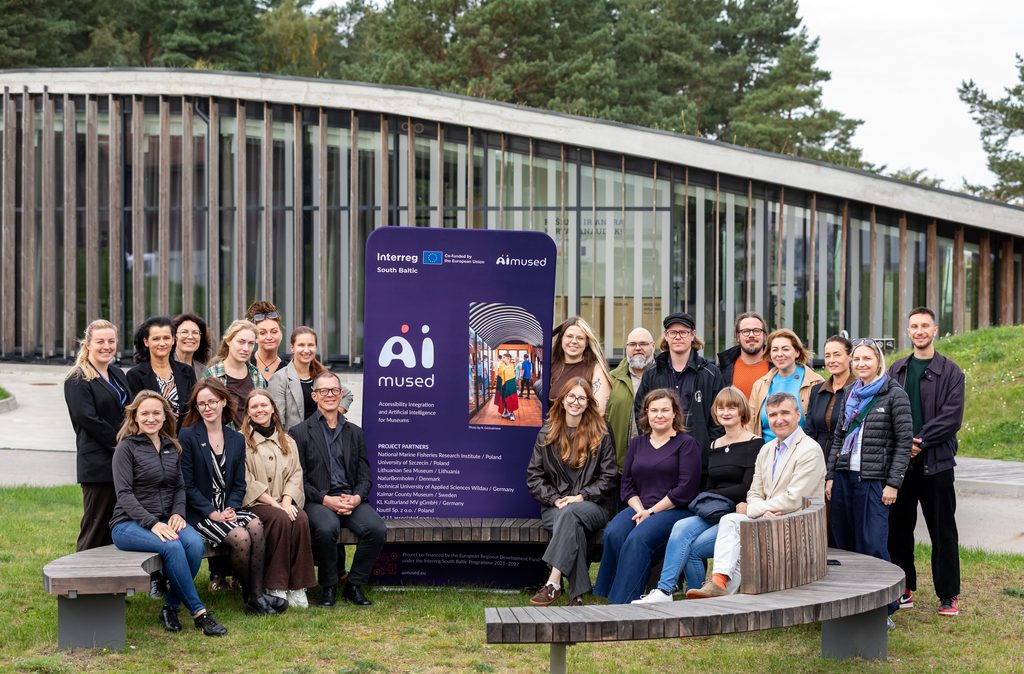
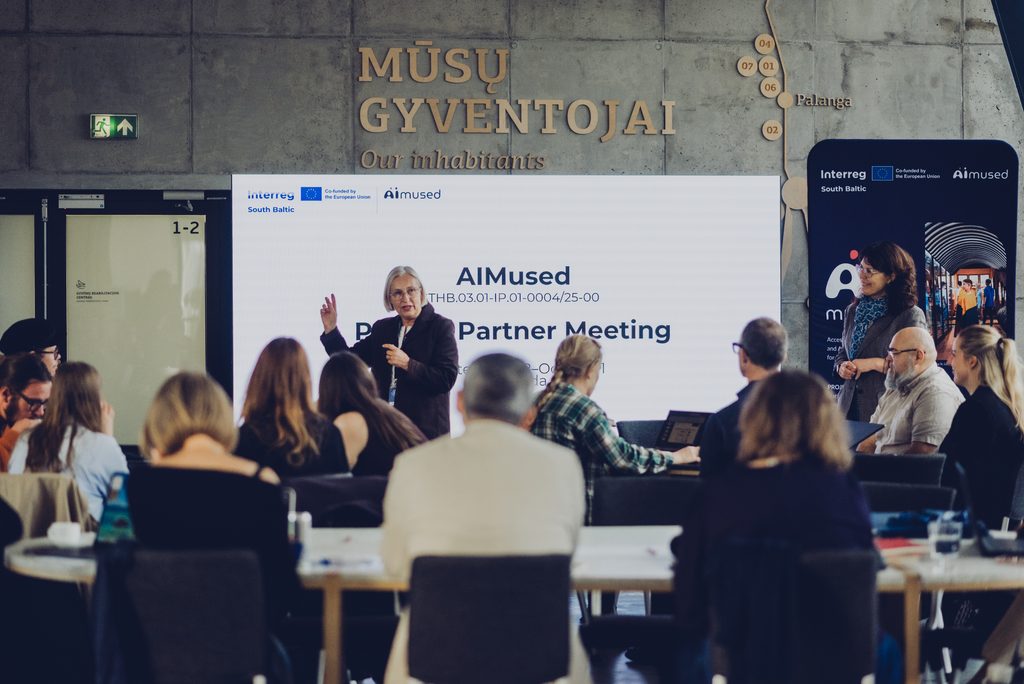
AIMused partners met in Klaipėda, Lithuania, for another transnational project meeting hosted by the Lithuanian Sea Museum.
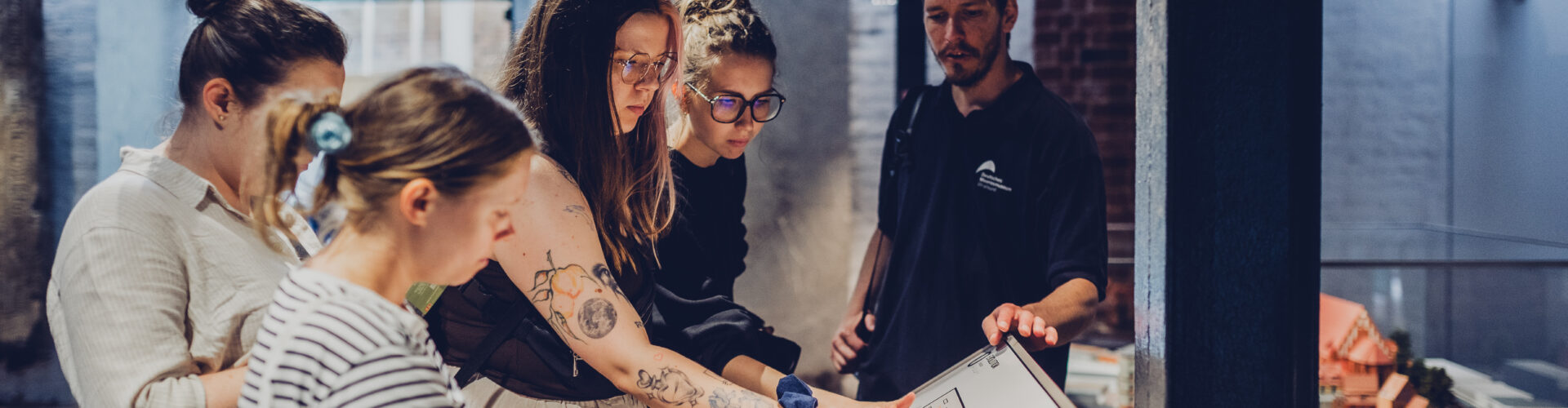
he meeting focused on the next stages of the project and on bringing together conclusions from partners’ study visits and Advisory Boards. We discussed accessibility in cultural and tourism institutions, assistive technologies, the opportunities and limitations of artificial intelligence, as well as the development of AIMused digital and physical tools.
Partners also exchanged their experiences collected throughout the project and discussed how the collected findings can be transformed into practical recommendations and future AIMused guidelines. The programme included a study visit at the Lithuanian Sea Museum.
First AIMused Project Meeting
27–28 October 2025
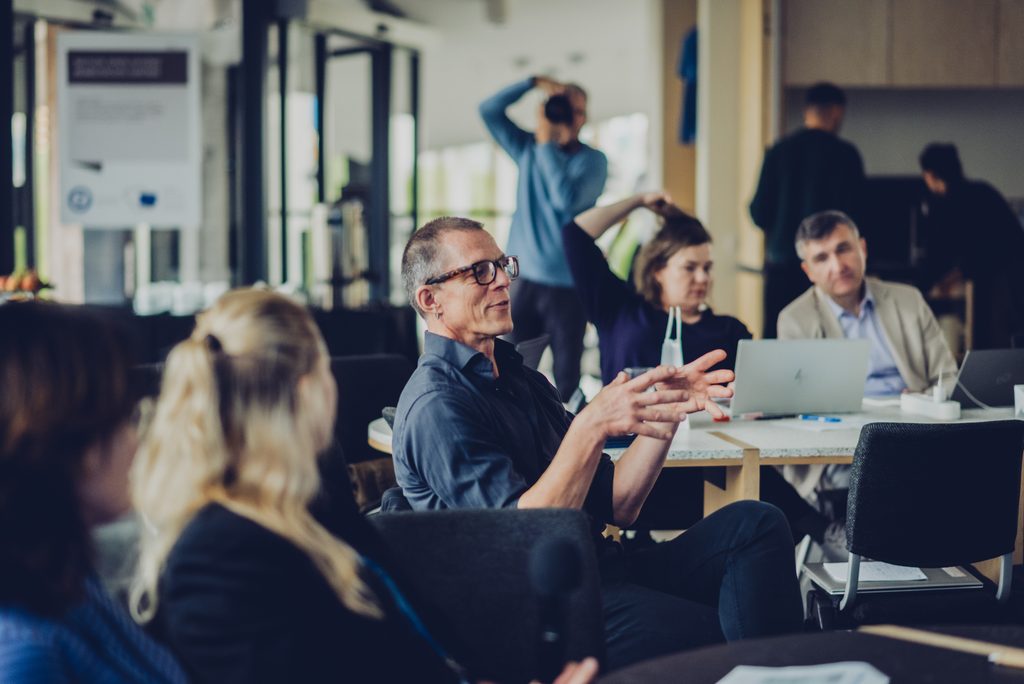
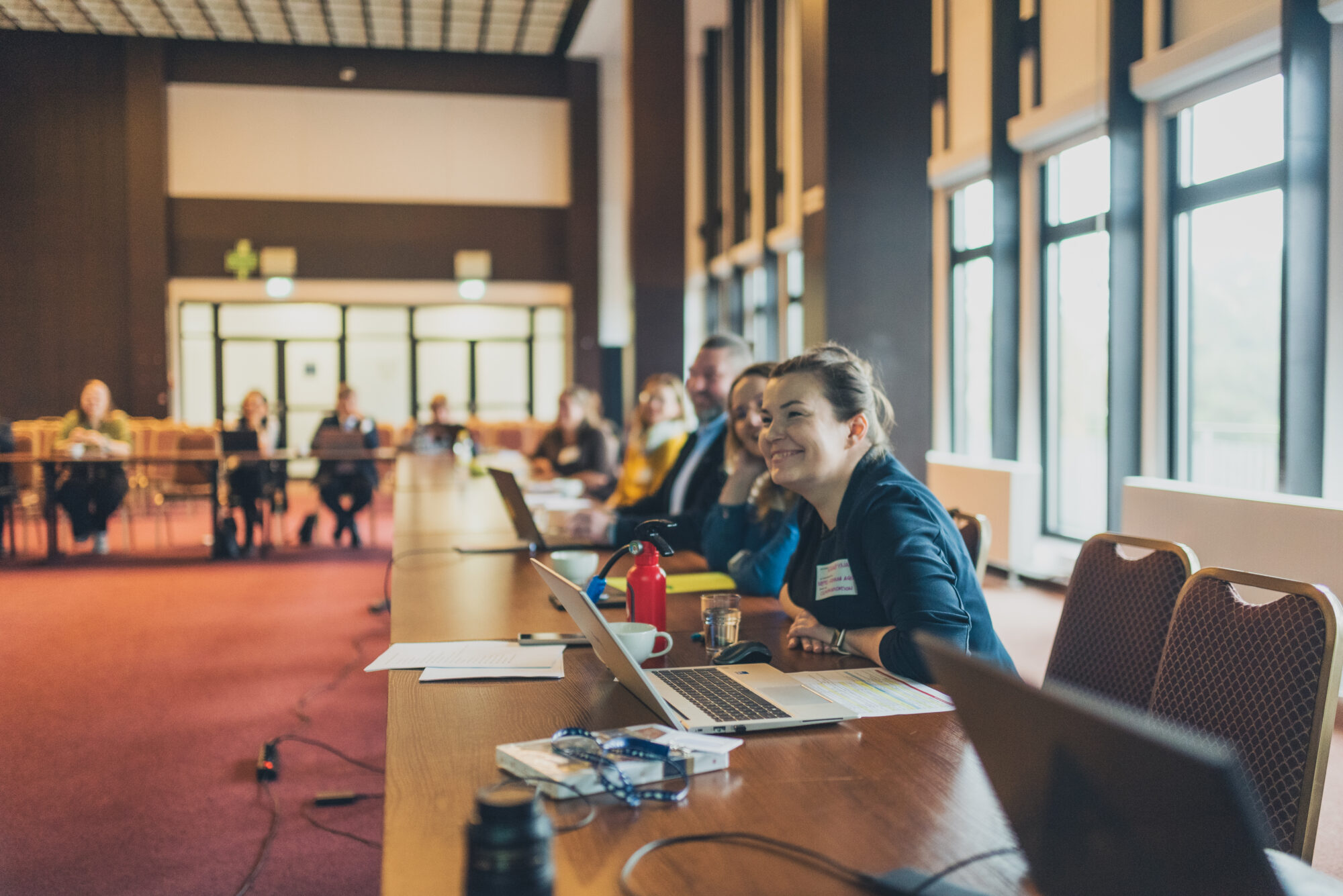
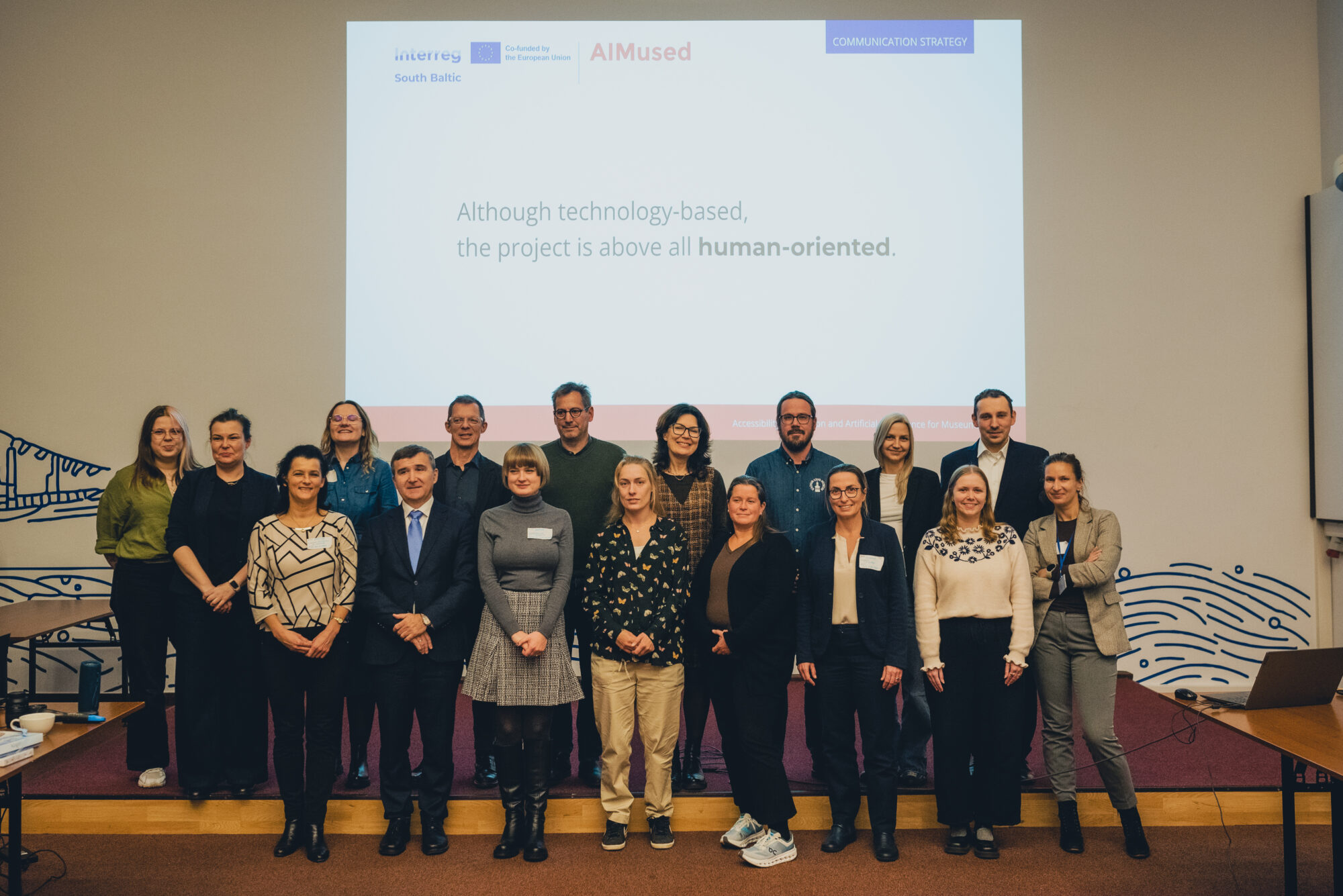
The first AIMused project meeting took place at the National Marine Fisheries Research Institute in Gdynia. For two days, we discussed what accessibility in tourism means to us, how to jointly implement our ideas, and how to shape the project so that it brings real change in the South Baltic region. The meeting was attended by project partners, representatives of the Interreg South Baltic Programme, and the Pomeranian Regional Tourist Organization.
AIMused officially launched
13 October 2025
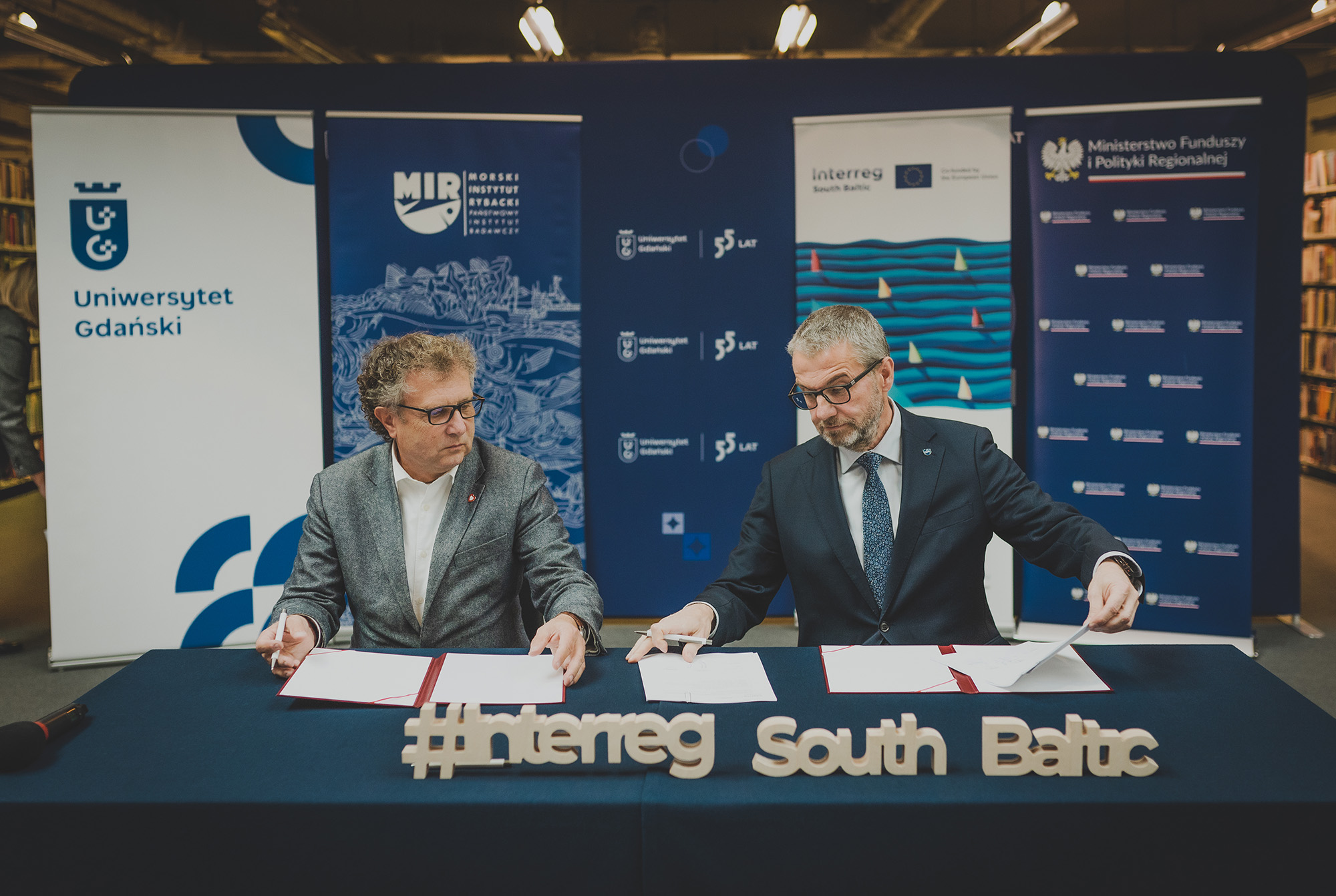
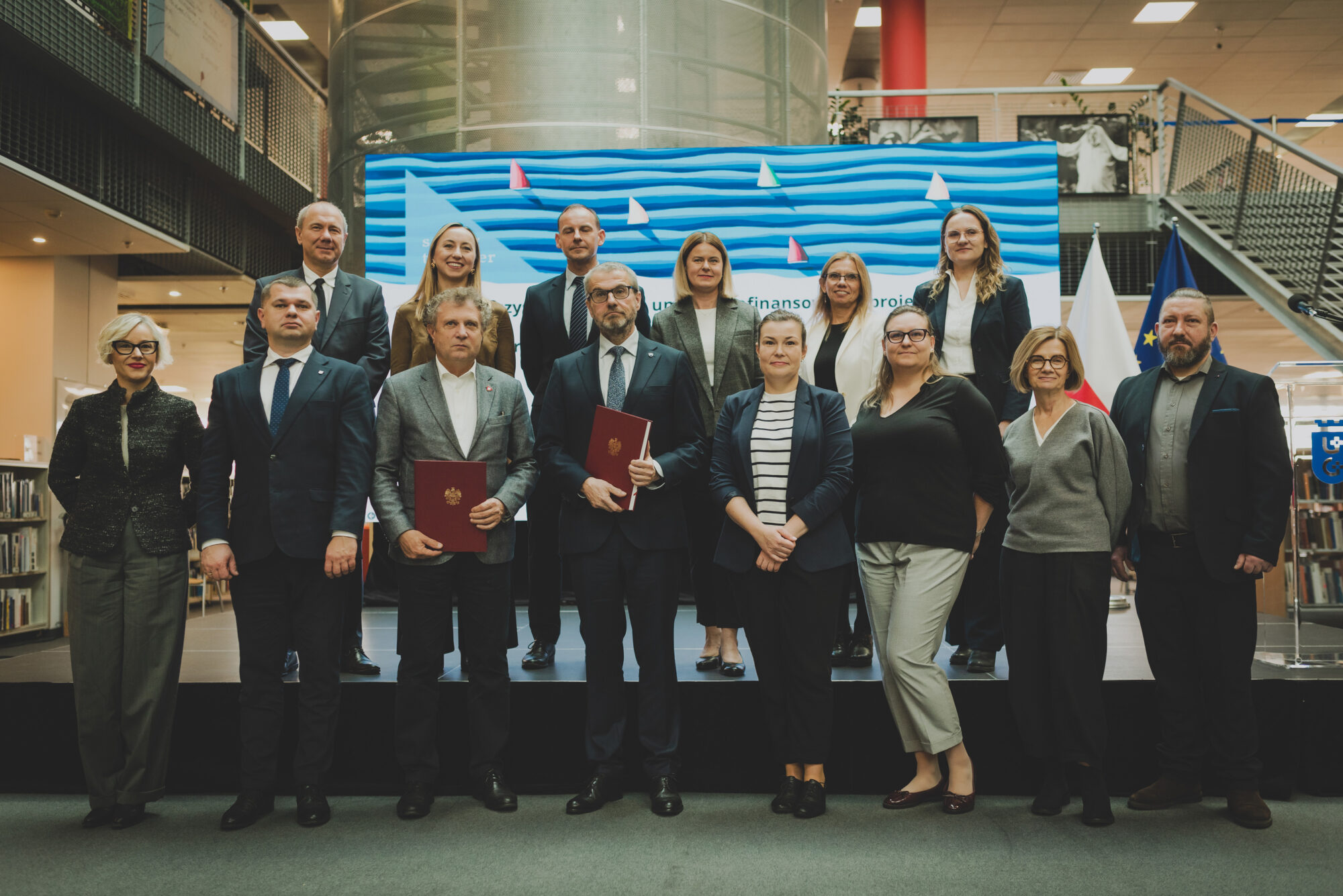
Director of the National Marine Fisheries Research Institute, Piotr Margoński, and Secretary of State at the Ministry of Funds and Regional Policy, Jacek Karnowski, signed the subsidy contract for the AIMused project, thus launching its implementation. The project is co-financed by the European Regional Development Fund under the Interreg South Baltic Programme 2021–2027.